Sites Prepared for What Comes Next
Land Clearing in Missoula for properties transitioning from raw land to construction-ready ground
Raw land covered in dense brush, saplings, and volunteer growth doesn't transform into a buildable site without deliberate removal of vegetation that would otherwise interfere with grading, foundation work, or utility installation. Land clearing removes trees, shrubs, stumps, and undergrowth from residential and commercial properties in Missoula, creating open ground where construction equipment can operate and site plans can be executed without working around obstacles that slow progress or complicate layout. T&G Tree Service uses professional equipment to strip vegetation while minimizing disturbance to areas outside the clearing zone, and the process handles everything from small residential lots to multi-acre commercial developments.
The clearing process involves cutting and removing above-ground vegetation, grinding stumps below grade so they don't interfere with grading or paving, and hauling debris off-site unless you prefer to keep certain material for other uses like firewood or erosion control. Equipment selection depends on lot size, vegetation density, and access constraints, with smaller machines used on residential properties where tight clearances or existing structures limit maneuverability.
Request a site evaluation to identify clearing boundaries and confirm equipment access before work begins.
Clearing starts with marking the work zone boundaries to protect trees and vegetation designated to remain, then progresses systematically through the site by felling or cutting vegetation at ground level and processing material into manageable sections for removal. Stump grinding follows once above-ground clearing is complete, with stumps ground six to twelve inches below existing grade depending on whether the area will be graded further or planted immediately after clearing.
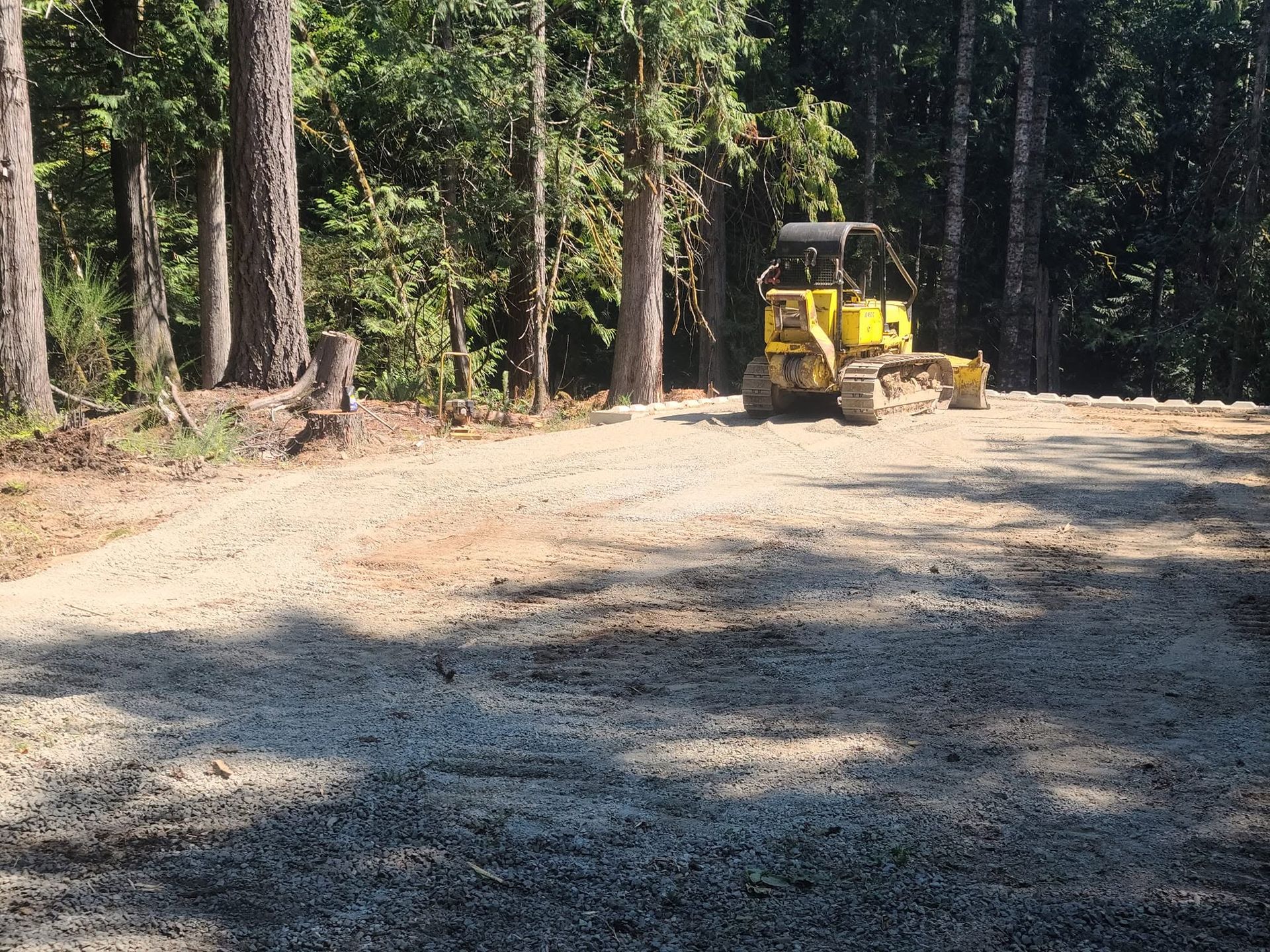
Once clearing is finished, the property shows open ground free of vertical obstructions, with stumps ground low enough that grading equipment won't strike hidden wood when leveling the site. Survey stakes and property markers remain visible without brush obscuring boundary lines, and construction crews can establish staging areas, access routes, and material storage zones without navigating around dense growth that would otherwise slow mobilization.
Land clearing doesn't include final grading, topsoil placement, or erosion control measures like silt fencing, though the clearing crew can coordinate timing with excavation contractors to streamline project schedules. Properties with steep slopes or highly erodible soils may require clearing to be completed in phases to prevent runoff from carrying exposed soil off-site before stabilization measures are in place.
Common Questions About Clearing Projects
Land clearing decisions often involve balancing cost, timing, and long-term site usability, and property owners typically want to understand what the process includes before committing to a project scope.
What happens to the vegetation and debris after clearing?
Most clearing projects include hauling all material off-site for disposal or processing, though you can request that certain material like larger logs be stacked on the property if you plan to use them for firewood or milling.
How deep are stumps ground during land clearing?
Stumps are typically ground six to twelve inches below the existing soil surface, which clears the way for grading equipment and prevents interference with shallow utilities, though deeper grinding can be arranged if the site plan requires it.
When should land clearing be scheduled relative to construction timelines?
Clearing is usually completed before site grading and utility installation begin, and scheduling during dry conditions in Missoula helps prevent equipment from rutting soft ground or compacting soil that will later need to be loosened for planting or drainage work.
What factors affect the cost of clearing a property?
Vegetation density, tree size, stump count, terrain slope, and site access all influence how long the project takes and what equipment is required, with heavily wooded lots or sites requiring selective clearing around designated trees taking longer than open brush removal.
How is selective clearing handled when certain trees need to be preserved?
The clearing crew marks trees designated for retention before work begins and operates equipment with enough precision to remove surrounding vegetation without damaging root zones or bark on trees that will remain as part of the final landscape.
T&G Tree Service works with property owners, builders, and developers to complete land clearing projects on schedules that align with construction timelines and permitting requirements. Schedule a site evaluation to establish clearing boundaries and confirm project scope based on your development plans.